Midwest Hardfacing
  • Roller Mill Parts
    • Rings
    • Rolls
    • Journals
    • Spiders and Supports
    • Wear Parts
  • Hammer Mill Parts
    • Pins and Rods
    • Hammers
  • Services
    • Rebuilding
    • Reverse Engineering / Custom Parts
    • Consulting
  • Used Parts
    • Used Parts Inventory
  • About Us
    • Blog
    • Careers
  • Contact
  • Menu Menu

A Guide to Different Hammer Mill Parts

Whether you’re involved in pharmaceuticals, food processing, or materials manufacturing, understanding the core components and functionality of hammer mills is crucial to effective operations. This guide provides a clear understanding of what hammer mills are, how they operate, and the essential parts that make them so effective in various industrial applications. By grasping these basics, you’ll be better equipped to make informed decisions about the hammer mill parts and equipment that best suit your operational needs.

What is a Hammer Mill?

A hammer mill is a crucial piece of equipment widely used across various industries to break things down. It essentially grinds or crushes materials into smaller pieces by repeated blows of little hammers mounted on a rotating shaft. The simplicity of its function—utilizing kinetic energy from rotating hammers to initiate impact with the material—makes it a versatile tool for handling tasks across industries.

How Does a Hammer Mill Work?

The operation of a hammer mill is straightforward. Material is fed into a grinding chamber where a series of spinning hammers attached to a rotor takes on the task. As the rotor spins, the hammers flail out, striking and shredding the material being processed. The speed of the rotor can control the fineness or coarseness of the final product, the size of the screen used, and the placement and type of hammers. The processed material then passes through a screen that covers the mill’s discharge opening, ensuring that no oversized particles escape the grinding process.

This basic yet effective milling solution is crucial for industries looking to process materials efficiently without excessive investment in more complex machinery.

Exploring Core Hammer Mill Parts

Understanding the essential parts of a hammer mill is key to appreciating how it functions and ensuring its effective maintenance. Here are some of the critical components:

The Role of Hammers

The hammers are the most crucial parts of the mill as they are responsible for the impact that crushes and shreds the material. Typically made from hardened steel, these hammers must withstand significant wear and tear, emphasizing the need for high-quality materials.

What Pins and Rods Do

Pins and rods hold the hammers in place and allow them to pivot or swing. Their strength and durability are vital as they bear the brunt of the force exerted by the hammers during operation.

Understanding the Central Rotor

The rotor is the central shaft that holds the hammers, pins, and rods. It needs to be robust and stable as it transmits the motor’s torque required to drive the hammers.

Examining the Feed Chute

The feed chute is where materials enter the hammer mill. Its design is crucial as it affects the material’s delivery rate and spread within the mill, impacting overall efficiency and effectiveness.

Looking at the Housing and Frame

The housing and frame of a hammer mill protect the internal components and enhance the machine’s durability and safety by providing support and enclosure.

These components work in harmony to accomplish the milling tasks. Regular checks and maintenance of these parts are essential to ensure the hammer mill operates efficiently and continues to meet the production demands of the industry.

Discover High-Quality Hammer Mill Parts

Don’t let worn parts and inefficient operations slow down your productivity. Upgrade your hammer mill with high-quality parts from Midwest Hardfacing.

View Our Selection

Types of Hammer Mills

Hammer mills come in various designs, each tailored to meet specific industrial needs. The diversity in types allows for better adaptability to different materials and processes, ensuring efficiency and effectiveness across a broad spectrum of applications.

  • Vertical Hammer Mills: Commonly used in agriculture and pharmaceuticals, vertical hammer mills use gravity to feed the material through the milling chamber. The vertical orientation allows for a more straightforward design and cost-effective operation, making it suitable for materials that are not excessively abrasive.
  • Horizontal Hammer Mills: These are more robust and generally used in heavier-duty applications such as scrap metal recycling and stone aggregate milling. They can handle harder materials and are favored for their durability and longevity.
  • High-Speed Hammer Mills: Designed for more refined particle size reduction, high-speed hammer mills operate at higher rotor speeds. Ideal for light, easy-to-mill materials, these mills produce finer, more consistent grinds, which is essential for applications in the food processing and chemical industries.
  • Low-Speed Hammer Mills: Often used for the coarse grinding of materials such as coal or organic waste, low-speed hammer mills operate at a slower pace to prevent the generation of excessive dust and heat. They are particularly effective in industries where the quality of the grind is more important than the speed at which it is achieved.

Each type of hammer mill has its unique advantages and is chosen based on the specific needs of the material being processed and the desired outcome of the milling operation. By understanding the differences among these types, businesses can better decide which hammer mill will most efficiently meet their needs.

Industries That Rely on Hammer Mills

Hammer mills are indispensable in a wide range of industries due to their robustness and versatility in handling different materials. Here’s a look at some key sectors that benefit significantly from using hammer mills:

  • Mining: Hammer mills facilitate the first step in the mineral extraction process by grinding ores into fine particles that can be further processed to extract valuable metals. They are especially useful in gold mining to pulverize ore to a fine powder, enabling efficient extraction of gold particles.
  • Pharmaceuticals: The pharmaceutical industry uses hammer mills to grind active ingredients and excipients to a specific particle size that ensures proper dissolution and absorption rates in the final product.
  • Food Processing: From spices to sugar, hammer mills play a critical role in the food industry. They grind food products for flavor extraction, processing, and packaging, ensuring the consistency and quality of the final products.

Tips for Maintenance and Care for Hammer Mill Parts

Maintaining a hammer mill is crucial for ensuring its operational efficiency and longevity. Proper care and regular maintenance can significantly extend the life of the mill and prevent costly downtime. Here are some essential maintenance tips:

Conduct Regular Inspections and Servicing

Conduct routine inspections to check for any signs of wear or damage to critical components such as hammers, pins, and screens. Replace worn parts promptly to maintain optimal performance and prevent further damage to the mill.

Regular lubrication of moving parts, especially the rotor bearings and support rods, is essential to reduce friction, prevent overheating, and prolong the life of these components.

Keeping the hammer mill clean is vital to preventing material build-up, which can lead to inefficiency and even damage. After each use, ensure that residue from the materials processed is cleaned out, especially around the hammers and the screen.

Operate the hammer mill within its design specifications. Overloading the mill with more material than it is designed to handle can strain the system and lead to premature wear.

Finally, ensure that all operators are well-trained in the proper operation and maintenance of the hammer mill. Understanding how to run the mill efficiently and how to spot and address minor issues before they become significant problems can save both time and money.

Adhering to these maintenance strategies helps in maintaining the hammer mill in optimal condition, enhancing its efficiency and reducing the likelihood of breakdowns.

Why Quality Matters in Hammer Mill Parts

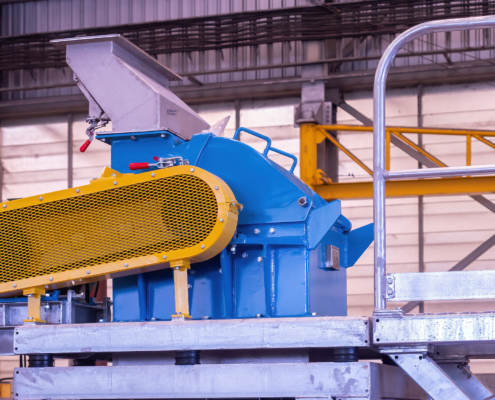
The effectiveness and longevity of a hammer mill significantly depend on the quality of its parts. Using high-quality hammer mill parts not only ensures reliable performance but also minimizes the risk of unexpected breakdowns, which can lead to costly downtime and disruptions in production.

Ready to Enhance Your Milling Operations?

Elevate the efficiency and longevity of your hammer mill with Midwest Hardfacing’s expert solutions. We offer a comprehensive range of high-quality parts, designed to meet the specific demands of your industrial applications.

Our expertise in hammer mill components ensures that you receive the best performance and value from your equipment. Contact us today to learn how our parts and services can help you optimize your production processes and achieve superior results.

Share This Post

  • Share on Facebook
  • Share on X
  • Share on WhatsApp
  • Share on Pinterest
  • Share on LinkedIn
  • Share on Tumblr
  • Share on Vk
  • Share on Reddit
  • Share by Mail

More Like This

A worker inspects and sorts round parts with holes

Roller Mill Rings: Complete Buyer’s Guide to Selection & Replacement

Roller Mill Parts
https://midwesthardfacing.com/wp-content/uploads/2026/05/A-worker-inspects-and-sorts-round-parts-with-holes.jpg 1250 2000 Abstrakt Marketing /wp-content/uploads/2024/03/Midwest-Hardfacing-1.png Abstrakt Marketing2026-05-07 07:27:592026-05-07 07:28:03Roller Mill Rings: Complete Buyer’s Guide to Selection & Replacement
Industrial Grain Crusher Hammers Close-Up Showing Heavy-Duty Design

5 Critical Warning Signs Your Mill Parts Need Replacement (Before Failure Costs You)

Hammer Mill Parts
https://midwesthardfacing.com/wp-content/uploads/2026/05/6_Industrial-Grain-Crusher-Hammers-Close-Up-Showing-Heavy-Duty-Design.jpg 1250 2000 Nate Riggins /wp-content/uploads/2024/03/Midwest-Hardfacing-1.png Nate Riggins2026-05-04 15:51:092026-05-04 15:51:175 Critical Warning Signs Your Mill Parts Need Replacement (Before Failure Costs You)
rotary longitudinal blade of universal crusher fine grinder machine for vegetable foodstuff_

Hammer Mill Replacement Parts: Complete Selection & Sourcing Guide

Hammer Mill Parts
https://midwesthardfacing.com/wp-content/uploads/2026/05/5_rotary-longitudinal-blade-of-universal-crusher-fine-grinder-machine-for-vegetable-foodstuff_.jpg 1250 2000 Nate Riggins /wp-content/uploads/2024/03/Midwest-Hardfacing-1.png Nate Riggins2026-05-04 15:39:142026-05-04 15:39:20Hammer Mill Replacement Parts: Complete Selection & Sourcing Guide
The Ins and Outs of Roller Mill Adjustments

How You Can Improve Milling Efficiency with Hardfaced Journals

Roller Mill Parts
https://midwesthardfacing.com/wp-content/uploads/2024/07/The-Ins-and-Outs-of-Roller-Mill-Adjustments.jpg 1250 2000 Abstrakt Marketing /wp-content/uploads/2024/03/Midwest-Hardfacing-1.png Abstrakt Marketing2025-12-09 08:47:212026-05-04 09:19:41How You Can Improve Milling Efficiency with Hardfaced Journals

What to Look for When Buying a Used Vertical Roller Mill

Roller Mill Parts, Roller Mills
https://midwesthardfacing.com/wp-content/uploads/2025/06/IMG_0577.jpeg 2048 1536 Abstrakt Marketing /wp-content/uploads/2024/03/Midwest-Hardfacing-1.png Abstrakt Marketing2025-08-11 14:27:062026-05-04 09:19:41What to Look for When Buying a Used Vertical Roller Mill
Stainless steel pipe, flange and bolts

Understanding Hammer Mill Part Wear and Tear

Hammer Mill Parts
https://midwesthardfacing.com/wp-content/uploads/2025/07/Stainless-steel-pipe-flange-and-bolts.jpg 1250 2000 Abstrakt Marketing /wp-content/uploads/2024/03/Midwest-Hardfacing-1.png Abstrakt Marketing2025-07-02 10:52:042026-05-04 09:19:41Understanding Hammer Mill Part Wear and Tear

Hammer Mill Hammers for Feed, Grain, and Biomass: What’s the Difference?

Hammer Mill Parts
https://midwesthardfacing.com/wp-content/uploads/2025/06/Hammer-mill.jpg 1250 2000 Abstrakt Marketing /wp-content/uploads/2024/03/Midwest-Hardfacing-1.png Abstrakt Marketing2025-06-18 14:58:342026-05-04 09:19:42Hammer Mill Hammers for Feed, Grain, and Biomass: What’s the Difference?
Rock crushing equipment in quarry

The Benefits of Hardfacing for Barite Grinding

Hammer Mill Parts, Hardfacing
https://midwesthardfacing.com/wp-content/uploads/2025/02/Rock-crushing-equipment-in-quarry.jpg 1250 2000 Abstrakt Marketing /wp-content/uploads/2024/03/Midwest-Hardfacing-1.png Abstrakt Marketing2025-02-19 12:31:582026-05-04 09:19:42The Benefits of Hardfacing for Barite Grinding
A Deep Dive Into Hammer Mill Structure and Components

Pin Mills Vs. Hammer Mills

Hammer Mill Parts
https://midwesthardfacing.com/wp-content/uploads/2024/09/A-Deep-Dive-Into-Hammer-Mill-Structure-and-Components.jpg 1250 2000 Abstrakt Marketing /wp-content/uploads/2024/03/Midwest-Hardfacing-1.png Abstrakt Marketing2025-01-09 04:31:222026-05-04 09:19:42Pin Mills Vs. Hammer Mills
Previous Previous Previous Next Next Next

Categories

  • Component Hardfacing
  • Downtime Reduction
  • Efficiency Optimization
  • Hammer Mill Operation
  • Hammer Mill Optimization
  • Hammer Mill Parts
  • Hammer Mill Repair
  • Hardfacing
  • Industrial Equipment Maintenance
  • Industrial Training
  • Maintenance Strategies
  • Mining
  • Preventive Maintenance
  • Roller Mill Optimization
  • Roller Mill Parts
  • Roller Mills
  • Vibration Control
  • Wear Parts
  • Workplace Safety

Contact Us

"*" indicates required fields

Who We Are

Midwest Hardfacing provides high-quality parts and services for roller and hammer mill across the world.

What We Do

Roller Mill Parts

Hammer Mill Parts

Services

Used Parts

Contact Us

205 E 4th Street / Rock Falls, IL 61071

(815) 622-9420

sales@midwesthardfacing.com

Website by Abstrakt Marketing Group ©
  • LinkedIn
  • Sitemap
  • Privacy Policy
Link to: A Deep Dive Into Hammer Mill Structure and Components Link to: A Deep Dive Into Hammer Mill Structure and Components A Deep Dive Into Hammer Mill Structure and ComponentsA Deep Dive Into Hammer Mill Structure and Components Link to: Raymond Roller Mills Vs. Williams Roller Mills: What You Need to Know Link to: Raymond Roller Mills Vs. Williams Roller Mills: What You Need to Know Raymond Roller Mills Vs. Williams Roller Mills: What You Need to Know
Scroll to top Scroll to top Scroll to top

This site uses cookies. By continuing to browse the site, you are agreeing to our use of cookies.

OKLearn more

Cookie and Privacy Settings


How we use cookies

We may request cookies to be set on your device. We use cookies to let us know when you visit our websites, how you interact with us, to enrich your user experience, and to customize your relationship with our website.

Click on the different category headings to find out more. You can also change some of your preferences. Note that blocking some types of cookies may impact your experience on our websites and the services we are able to offer.

Essential Website Cookies

These cookies are strictly necessary to provide you with services available through our website and to use some of its features.

Because these cookies are strictly necessary to deliver the website, refusing them will have impact how our site functions. You always can block or delete cookies by changing your browser settings and force blocking all cookies on this website. But this will always prompt you to accept/refuse cookies when revisiting our site.

We fully respect if you want to refuse cookies but to avoid asking you again and again kindly allow us to store a cookie for that. You are free to opt out any time or opt in for other cookies to get a better experience. If you refuse cookies we will remove all set cookies in our domain.

We provide you with a list of stored cookies on your computer in our domain so you can check what we stored. Due to security reasons we are not able to show or modify cookies from other domains. You can check these in your browser security settings.

Other external services

We also use different external services like Google Webfonts, Google Maps, and external Video providers. Since these providers may collect personal data like your IP address we allow you to block them here. Please be aware that this might heavily reduce the functionality and appearance of our site. Changes will take effect once you reload the page.

Google Webfont Settings:

Google Map Settings:

Google reCaptcha Settings:

Vimeo and Youtube video embeds:

Accept settingsHide notification only