Midwest Hardfacing
  • Roller Mill Parts
    • Rings
    • Rolls
    • Journals
    • Spiders and Supports
    • Wear Parts
  • Hammer Mill Parts
    • Pins and Rods
    • Hammers
  • Services
    • Rebuilding
    • Reverse Engineering / Custom Parts
    • Consulting
  • Used Parts
    • Used Parts Inventory
  • About Us
    • Blog
    • Careers
  • Contact
  • Menu Menu

What is a Hammer Mill? How It Works, Types & Applications

If you’re researching size reduction equipment for industrial applications, you’ve likely encountered the term “hammer mill.” But what exactly is a hammer mill, how does it work, and is it the right choice for your operation?

This comprehensive guide breaks down everything you need to know about hammer mills—from basic operation principles to types, parts, applications, and selection criteria. Whether you’re processing grain, biomass, recycling materials, or industrial feedstocks, understanding hammer mill fundamentals will help you make informed equipment decisions.

What is a Hammer Mill?

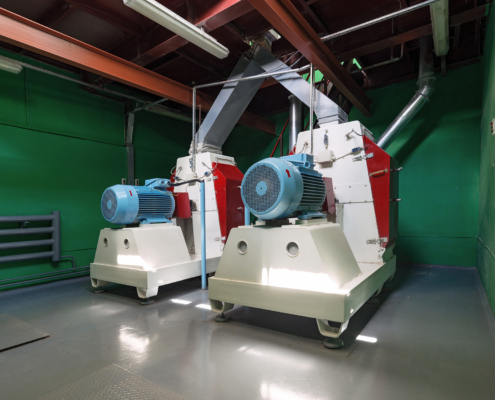
A hammer mill is a size reduction machine that uses rapidly rotating hammers to shred or crush material into smaller particles. The basic principle is simple: material enters a chamber where spinning hammers impact it repeatedly until particles are small enough to pass through a screen and exit the mill.

Unlike cutting mills that use shearing action or roller mills that compress material, hammer mills rely on impact force. This makes them particularly effective for brittle materials, fibrous feedstocks, and applications requiring significant size reduction in a single pass.

Hammer mills are workhorses in industries from agriculture to recycling, processing everything from grain and wood chips to plastic scrap and pharmaceutical ingredients. Their versatility, relatively simple design, and ability to handle varied feedstocks make them one of the most common industrial size reduction solutions.

How Hammer Mills Work: The Basic Mechanism

The hammer mill mechanism is straightforward but effective:

1. Material Entry: Raw material is fed into the mill through a top or side inlet, entering the grinding chamber.

2. Impact and Shredding: A high-speed rotor (typically 1,800 to 3,600 RPM) spins multiple hammers mounted on pins. These hammers strike the material repeatedly, breaking it into progressively smaller pieces.

3. Grinding Against Screen: Material is held in the chamber until particles are small enough to pass through perforated screen plates that line the chamber wall. Screen hole size determines final particle size.

4. Discharge: Once material passes through the screen, it exits the mill and can be collected, conveyed to the next process, or further processed.

The process relies on kinetic energy transfer. The faster the rotor spins and the heavier the hammers, the more impact force is delivered. Variables like hammer configuration, screen size, and rotor speed can be adjusted to achieve desired particle size and throughput.

Types of Hammer Mills

Hammer mills come in several configurations, each optimized for specific applications:

Gravity Discharge (Drop Bottom) Hammer Mills

These mills discharge ground material by gravity through the bottom. Simple and economical, they work well for free-flowing materials like grains, dried biomass, and pellets. The gravity discharge design minimizes power consumption but may not be suitable for sticky or fibrous materials that resist falling through the screen.

Full Circle (Pneumatic Discharge) Hammer Mills

Full circle screens surround the rotor completely, and airflow from the rotating hammers creates pneumatic discharge. These mills excel at processing fibrous, sticky, or difficult materials that might bridge in a gravity mill. The air assist helps clear the screen and convey material out efficiently.

Pin Mill (Disintegrator) Style

Pin mills use rows of pins on rotating discs rather than swinging hammers. Material is sheared and impacted between opposing rows of pins. They’re particularly effective for fine grinding and heat-sensitive materials where controlling temperature is critical. Pin mills typically produce tighter particle size distributions than traditional hammer mills.

Reversible Hammer Mills

These mills feature hammers and screens that can be flipped or reversed to balance wear, extending part life before replacement. When one side of the hammer wears down, operators can reverse the rotation direction to use the opposite edge, essentially doubling hammer life.

Main Parts and Components of a Hammer Mill

Understanding hammer mill components helps with operation, maintenance, and troubleshooting. Key parts include:

Hammers

The primary wear component. Hammers are typically made from hardened steel, tool steel, or can be hardfaced for extended life. Hammer design (thickness, width, hole configuration) affects both performance and longevity. Thicker hammers last longer but add weight and inertia.

Rotor and Shaft

The rotor is the rotating assembly that holds hammers via pins or bolts. The shaft must handle substantial forces and is typically made from high-strength alloy steel. Rotor balance is critical—imbalance causes vibration, bearing failure, and premature wear.

Screens

Perforated metal plates that control final particle size. Screen hole size directly determines product fineness. Screens wear over time, and holes enlarge, changing particle size distribution. Regular screen inspection and replacement maintains product consistency.

Feed Hopper and Chute

Material entry point. Design affects feed consistency and can prevent bridging in the hopper. Some mills include feed rollers or augers to meter material into the chamber at controlled rates.

Housing and Frame

The structural enclosure that contains the grinding chamber and supports all components. Heavy-duty frames reduce vibration and maintain alignment. Many housings are lined with replaceable wear plates to protect against abrasion.

For detailed information on hammer mill replacement parts, including specifications and sourcing, consult with experienced suppliers who understand the critical role each component plays in overall mill performance.

Common Industrial Applications for Hammer Mills

Hammer mills are versatile machines used across numerous industries:

Agriculture and Feed Processing

Grinding grains (corn, wheat, barley, soybeans) for animal feed is one of the most common hammer mill applications. Mills process whole grains into meal or flour, and can handle everything from poultry feed to cattle rations. Screen size determines whether you’re producing coarse chop for dairy cows or fine flour for swine feed.

Biomass and Renewable Energy

Wood chips, bark, straw, and agricultural residues are processed into uniform particles for pellet production, boiler fuel, or cellulosic ethanol feedstock. Hammer mills handle the fibrous, variable-moisture material typical in biomass operations.

Recycling and Waste Processing

Plastic scrap, e-waste, construction debris, and yard waste are all commonly processed through hammer mills. The ability to handle mixed, contaminated feedstock makes hammer mills ideal for recycling applications where feed consistency varies.

Chemical and Pharmaceutical

Fine grinding of chemical intermediates, active pharmaceutical ingredients, and formulation components. Specialized sanitary-design hammer mills with stainless steel construction meet food and pharma industry standards.

Mining and Minerals

Processing coal, limestone, gypsum, and other minerals. While larger primary crushing uses jaw or gyratory crushers, hammer mills often serve in secondary or tertiary reduction for moderate hardness materials.

When Hammer Mills Are the Right Choice

Hammer mills excel in specific scenarios:

✓ Brittle or Friable Materials

Materials that fracture easily under impact—grains, dried biomass, coal, many minerals—are ideal for hammer mills. The repeated impact action efficiently reduces particle size.

✓ Moderate to High Throughput Requirements

Hammer mills can process large volumes efficiently. Capacities range from a few hundred pounds per hour in laboratory mills to 50+ tons per hour in large industrial units.

✓ Applications Accepting Wider Particle Size Distribution

While hammer mills can produce fine particles, they typically generate a broader size distribution than roller mills or jet mills. If your process tolerates some variation, hammer mills are cost-effective.

✓ Budget-Conscious Operations

Compared to roller mills or specialized grinding equipment, hammer mills generally have lower initial capital costs and straightforward maintenance. For many operations, the total cost of ownership makes hammer mills the practical choice.

When to Consider Alternatives

Hammer mills may not be optimal for:

• Tough, elastic materials like rubber or certain plastics that absorb impact rather than fracturing

• Heat-sensitive materials where impact energy generates excessive heat (though specialized designs can mitigate this)

• Ultra-fine grinding requirements where tight particle size control is critical—jet mills or roller mills may be better suited

• Very hard materials like certain ores or minerals—impact crushers or roller mills handle hardness better

Contact our team today to discuss your hammer mill parts needs or to learn how hardfacing can reduce your maintenance costs and downtime.

Get in Touch

Maintenance and Longevity Considerations

Hammer mills are relatively simple to maintain, but wear components require regular attention:

Hammer Replacement

Hammers are high-wear items. Lifespan varies dramatically based on material processed—from weeks in abrasive mining applications to months in grain processing. Worn hammers reduce efficiency and increase energy consumption. Many operations keep spare hammer sets on hand to minimize downtime during replacement.

Hardfacing hammer tips can extend life by 3-5x compared to standard steel hammers. While hardfaced hammers cost more initially, the reduced replacement frequency often provides better total cost of ownership in abrasive applications.

Screen Maintenance

Screens wear and holes enlarge over time, changing particle size. Monitor product fineness regularly. When particle size drifts out of specification, screen replacement is needed. Keeping spare screens allows quick changeovers.

Bearing and Shaft Inspection

Bearings support high rotational speeds and impact loads. Regular lubrication and vibration monitoring catch bearing problems before catastrophic failure. Shaft wear, especially at hammer pin locations, should be inspected during hammer changes.

Rotor Balance

Replace hammers in complete sets or maintain symmetrical wear to preserve rotor balance. Unbalanced rotors cause vibration, bearing failure, and frame damage. If vibration develops suddenly, check for lost or broken hammers.

The Replace vs. Hardface Decision

For high-wear components like hammers and wear plates, operations face a choice: replace with new parts or restore worn parts through hardfacing. Hardfacing builds up worn areas with abrasion-resistant material, often extending part life well beyond original new-part longevity.

The decision depends on part cost, downtime tolerance, and abrasiveness of the application. In many cases, hardfacing provides superior ROI, particularly for larger, more expensive components.

Making the Right Equipment Decision

Choosing any size reduction equipment requires matching capabilities to your specific needs:

1. Define your material characteristics: Hardness, moisture content, friability, and abrasiveness all affect equipment selection and expected wear rates.

2. Determine particle size requirements: What is your target output size, and how critical is tight size distribution?

3. Calculate throughput needs: How many tons per hour do you need to process? Remember to include downtime for maintenance when sizing equipment.

4. Consider total cost of ownership: Initial capital cost is just one factor. Energy consumption, wear parts cost, and maintenance labor add up over equipment life.

5. Evaluate support and parts availability: Can you get replacement parts quickly? Is technical support available when you need it?

Get Expert Guidance on Hammer Mill Parts and Services

Understanding hammer mill fundamentals is the first step toward optimizing your size reduction process. Whether you’re selecting new equipment, maintaining existing mills, or evaluating replacement vs. hardfacing strategies for wear parts, expert guidance makes a measurable difference in performance and cost.

Midwest Hardfacing specializes in hammer mill parts, hardfacing services, and technical support for industrial milling operations. Reach out today to our expert team.

Share This Post

  • Share on Facebook
  • Share on X
  • Share on WhatsApp
  • Share on Pinterest
  • Share on LinkedIn
  • Share on Tumblr
  • Share on Vk
  • Share on Reddit
  • Share by Mail

More Like This

Rotary hammer mills for grinding wheat and barley grain

Roller Mill vs Hammer Mill: Complete Comparison Guide

Hammer Mill Optimization
https://midwesthardfacing.com/wp-content/uploads/2026/05/3_Rotary-hammer-mills-for-grinding-wheat-and-barley-grain.jpg 1250 2000 Nate Riggins /wp-content/uploads/2024/03/Midwest-Hardfacing-1.png Nate Riggins2026-05-04 15:18:522026-05-04 15:18:55Roller Mill vs Hammer Mill: Complete Comparison Guide
Close-up of hammer mill

The Importance of Proper Hammer MIll Balancing and Alignment

Hammer Mill Optimization, Hammer Mill Repair, Vibration Control
https://midwesthardfacing.com/wp-content/uploads/2025/09/Close-up-of-hammer-mill.jpg 1250 2000 Abstrakt Marketing /wp-content/uploads/2024/03/Midwest-Hardfacing-1.png Abstrakt Marketing2025-09-08 10:05:312026-05-04 09:19:41The Importance of Proper Hammer MIll Balancing and Alignment

Categories

  • Component Hardfacing
  • Downtime Reduction
  • Efficiency Optimization
  • Hammer Mill Operation
  • Hammer Mill Optimization
  • Hammer Mill Parts
  • Hammer Mill Repair
  • Hardfacing
  • Industrial Equipment Maintenance
  • Industrial Training
  • Maintenance Strategies
  • Mining
  • Preventive Maintenance
  • Roller Mill Optimization
  • Roller Mill Parts
  • Roller Mills
  • Vibration Control
  • Wear Parts
  • Workplace Safety

Contact Us

"*" indicates required fields

Who We Are

Midwest Hardfacing provides high-quality parts and services for roller and hammer mill across the world.

What We Do

Roller Mill Parts

Hammer Mill Parts

Services

Used Parts

Contact Us

205 E 4th Street / Rock Falls, IL 61071

(815) 622-9420

sales@midwesthardfacing.com

Website by Abstrakt Marketing Group ©
  • LinkedIn
  • Sitemap
  • Privacy Policy
Link to: How Hardfaced Journals Efficiency Improves Roller Mill Performance Link to: How Hardfaced Journals Efficiency Improves Roller Mill Performance How Hardfaced Journals Efficiency Improves Roller Mill PerformanceFactory for the production of conveyor belts Link to: Industrial Hardfacing Services: Process, Benefits & ROI Guide Link to: Industrial Hardfacing Services: Process, Benefits & ROI Guide Experienced operator in a hard hat. Metalworking industryIndustrial Hardfacing Services: Process, Benefits & ROI Guide
Scroll to top Scroll to top Scroll to top

This site uses cookies. By continuing to browse the site, you are agreeing to our use of cookies.

OKLearn more

Cookie and Privacy Settings


How we use cookies

We may request cookies to be set on your device. We use cookies to let us know when you visit our websites, how you interact with us, to enrich your user experience, and to customize your relationship with our website.

Click on the different category headings to find out more. You can also change some of your preferences. Note that blocking some types of cookies may impact your experience on our websites and the services we are able to offer.

Essential Website Cookies

These cookies are strictly necessary to provide you with services available through our website and to use some of its features.

Because these cookies are strictly necessary to deliver the website, refusing them will have impact how our site functions. You always can block or delete cookies by changing your browser settings and force blocking all cookies on this website. But this will always prompt you to accept/refuse cookies when revisiting our site.

We fully respect if you want to refuse cookies but to avoid asking you again and again kindly allow us to store a cookie for that. You are free to opt out any time or opt in for other cookies to get a better experience. If you refuse cookies we will remove all set cookies in our domain.

We provide you with a list of stored cookies on your computer in our domain so you can check what we stored. Due to security reasons we are not able to show or modify cookies from other domains. You can check these in your browser security settings.

Other external services

We also use different external services like Google Webfonts, Google Maps, and external Video providers. Since these providers may collect personal data like your IP address we allow you to block them here. Please be aware that this might heavily reduce the functionality and appearance of our site. Changes will take effect once you reload the page.

Google Webfont Settings:

Google Map Settings:

Google reCaptcha Settings:

Vimeo and Youtube video embeds:

Accept settingsHide notification only