Midwest Hardfacing
  • Roller Mill Parts
    • Rings
    • Rolls
    • Journals
    • Spiders and Supports
    • Wear Parts
  • Hammer Mill Parts
    • Pins and Rods
    • Hammers
  • Services
    • Rebuilding
    • Reverse Engineering / Custom Parts
    • Consulting
  • Used Parts
    • Used Parts Inventory
  • About Us
    • Blog
    • Careers
  • Contact
  • Menu Menu

How to Tell When Your Roller Mill Rolls Need Replacing or Reconditioning

A roller mill loses grinding performance long before the rolls show obvious physical damage. Throughput falls, product fineness drifts coarser, and the mill starts pulling more power, and most operations respond by adjusting feed rate or speed rather than looking at the condition of the roller mill rolls. The four indicators that grinding rolls are past their effective service life show up in a predictable sequence, and reading that sequence is what separates a planned replace-or-recondition decision from an emergency sourcing call.
What Worn Mill Rollers Are Actually Costing Your Operation

The visible cost of worn mill rollers shows up as a parts bill. The actual cost accumulates quietly in the weeks before anyone pulls a roll for inspection.

How Fineness Drift Costs More Than Replacement Does

When roller mill rolls wear past their effective working profile, particle size distribution widens before throughput drops. The mill is still moving material at roughly normal rates, but the product is coarser than the process requires. In cement and mineral processing, that’s off-spec product. In aggregate operations, it’s gradation failures. In feed processing, it’s inconsistent ration quality downstream. The fineness loss tends to get attributed to a process or recipe variable before someone looks at the condition of the roller mill rolls.

The Secondary Damage Path Operators Miss

Worn rolls with a degraded surface don’t just reduce grinding efficiency. They also change the load distribution across the mill’s bearing and journal system. Running rolls past their effective service life under production load accelerates journal wear and puts stress on the spider and support assembly. The roll is the first component to show wear in a functioning grinding system, but it’s rarely the last one damaged when replacement is deferred too long.

Four Signs Your Roller Mill Rolls Need Attention

These indicators appear in a predictable sequence. Catching them at Stage 1 or 2 means a planned decision. Catching them at Stage 3 or 4 means the mill has already been absorbing the cost for a while.

Product Fineness Drift: The Earliest Signal

Particle size shifting coarser without a feed rate or screen change is the earliest detectable sign of roll wear in a grinding roller mill. The roll’s working surface profile (smooth, corrugated, or profiled depending on the application) determines how effectively it reduces material between roll and ring. As that profile erodes, reduction efficiency drops before the throughput rate does. If your product is coming out coarser than specification and you haven’t changed the process, the rolls are the first place to check.

Throughput Decline Without a Feed Change

After fineness drift comes throughput loss. The mill is working harder per ton of material processed because the rolls can’t deliver the same reduction energy they could when the surface was in specification. Some operations respond by reducing feed rate to hold product quality, which masks the root cause and extends the period of degraded performance. If you’ve had to slow the feed to maintain acceptable fineness, the rolls are telling you something.

Visible Surface Wear: Flat Spots, Grooving, and Spalling

At this stage the wear is physically detectable during a shutdown inspection. Look for flat spots where the working surface has worn smooth, grooving or channeling where material has tracked consistently across the roll face, and spalling where surface material has separated under fatigue. Any of these patterns indicates the roll is no longer running a consistent working geometry. For a broader inspection framework that covers rolls alongside rings and journals, the roller mill maintenance schedule guide covers the intervals and inspection points that matter across the full grinding assembly.

Elevated Power Draw or Bearing Temperature

Worn roll surfaces create higher friction loads and uneven contact distribution across the grinding zone. The mill draws more power to maintain the same throughput, and heat builds in the bearing and journal assemblies. If power draw is trending upward without a corresponding increase in feed rate, or bearing temperatures are running above your established baseline, the condition of the rolls is worth inspecting before the bearings absorb more of the load.

Replace or Recondition: How to Make the Call

Most maintenance teams make this decision on feel. The actual criteria are more specific than they look, and getting it right affects both cost and how long the next service interval runs.

When Reconditioning Is the Right Answer

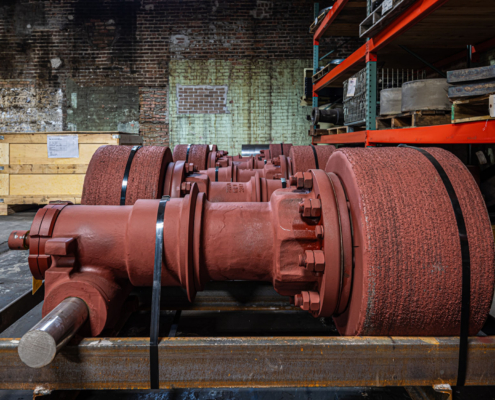
Roller mill rolls that show measurable surface wear but haven’t lost structural integrity are candidates for reconditioning through hardfacing rather than full replacement. The hardfacing process rebuilds the working surface by applying a tungsten carbide or chromium carbide overlay, restoring the surface profile and hardening it beyond the original material specification. A reconditioned roll typically returns to service with a longer wear life than a standard replacement because the overlay material is more wear-resistant than the base steel it replaced.

Reconditioning makes economic sense when the roll body is structurally sound, core geometry is within tolerance, and the wear is limited to the working face. When those conditions are met, a rebuild costs less than a new roll and returns a part that outlasts a straight replacement. For the full cost comparison across roller mill components, comparing the cost of hardfacing with full replacement covers how that math works. Midwest Hardfacing’s rebuilding services include a condition assessment before any work is quoted, so the decision is grounded in what the inspection actually finds.

When Replacement Is the Right Answer

Some conditions put a roll past the point where reconditioning makes sense. Cracking or fracturing in the roll body, core geometry out of tolerance, or surface wear too deep to restore with a practical overlay thickness all indicate replacement is the correct path. A roll with structural damage will not be made functional by hardfacing its surface since base metal integrity is the prerequisite for reconditioning to work.

If your rolls are showing any of the four indicators above and you’re not sure whether replacement or reconditioning is the right call, Midwest Hardfacing can help. With 30 years of experience from Rock Falls, IL, we supply roller mill replacement parts and perform in-house reconditioning for a wide range of grinding mill configurations.

Get in Touch

How the Material You’re Processing Affects the Decision

No standard replacement interval exists for mill rollers in grinding applications because wear rate is driven almost entirely by what the mill is processing and the operating conditions it runs under.

High-Abrasion Applications

Plants processing cement clinker, hard minerals, or abrasive aggregates put the highest wear load on roller mill rolls. Surface wear accumulates faster, the working profile erodes more quickly, and the replacement or reconditioning cycle is shorter. In these applications, applying tungsten carbide hardfacing as a preventive measure before the roll reaches failure-level wear extends service life significantly and reduces total parts spend per ton processed.

Lower-Abrasion and Agricultural Applications

Feed grain, soft minerals, and lower-abrasion materials produce slower wear rates on rolling mill rollers. The fineness drift early warning sign is especially important in these applications because visual surface wear takes much longer to appear. A roll can lose grinding effectiveness well before anyone sees obvious damage during a walkthrough inspection, which makes product quality monitoring the more reliable signal in these operations.

Replacing One Roll or Evaluating the Full Set

A roll that has worn to the point of needing replacement or reconditioning rarely does so in isolation. The other rolls in the assembly have been running under the same material, feed rate, and operating conditions.

Why Mixed Roll Conditions Undermine Grinding Performance

When one roll in a set is worn significantly beyond the others, grinding pressure across the mill isn’t evenly distributed. The worn roll delivers less reduction force, so material isn’t being processed consistently across the full grinding zone. Introducing one new or reconditioned roll alongside heavily worn companions re-creates the same imbalance from the other direction.

Inspecting the Full Assembly Before Committing

Roll condition should be evaluated as a set, not roll by roll. If one roll has reached Stage 3 or 4 wear, inspect the others against the four indicators above before deciding between single-roll and full-set action. If two or more rolls in the assembly are showing Stage 2 or beyond, the full set is the right call. For a broader look at what drives premature wear across mill components, the root cause analysis on early mill part failure covers the operational decisions that accelerate the wear cycle across the full grinding system.

Plan the Roll Decision Before the Mill Makes It for You

The replace-or-recondition decision is easiest to make correctly when it’s made proactively. Fineness drift and throughput loss both cost production. Deferring the decision compounds those costs and narrows the options by the time something forces the issue.

Midwest Hardfacing supplies roller mill parts and performs in-house roll reconditioning from Rock Falls, IL, with over 30 years of experience matching parts to specific mill configurations and material applications. For mills running non-standard roll geometries or configurations that OEMs no longer support, in-house manufacturing means the sourcing problem doesn’t become a production problem. If your rolls are showing any of the signs above and you want a condition assessment before committing to a direction, reach out and we’ll talk through what the inspection finds.

Share This Post

  • Share on Facebook
  • Share on X
  • Share on WhatsApp
  • Share on Pinterest
  • Share on LinkedIn
  • Share on Tumblr
  • Share on Vk
  • Share on Reddit
  • Share by Mail

More Like This

Roller Mill Ring Wear Patterns: A Diagnostic Guide to Causes and Prevention

Roller Mills
https://midwesthardfacing.com/wp-content/uploads/2024/06/Hardfacing-rollers.jpg 1250 2000 Abstrakt Marketing /wp-content/uploads/2024/03/Midwest-Hardfacing-1.png Abstrakt Marketing2026-06-17 15:17:552026-06-17 15:17:58Roller Mill Ring Wear Patterns: A Diagnostic Guide to Causes and Prevention

How Lead Times Impact Plant Downtime: Why In-House Manufacturing Matters

Downtime Reduction, Roller Mills
https://midwesthardfacing.com/wp-content/uploads/2024/05/Two-workers-drilling-parts.jpg 1250 2000 Abstrakt Marketing /wp-content/uploads/2024/03/Midwest-Hardfacing-1.png Abstrakt Marketing2025-12-09 08:45:172026-05-04 09:19:41How Lead Times Impact Plant Downtime: Why In-House Manufacturing Matters

OEM vs. Aftermarket Roller Mill Parts: Which Offers Better Performance?

Roller Mills
https://midwesthardfacing.com/wp-content/uploads/2024/05/Rollers-for-a-roller-mill.jpg 1250 2000 Abstrakt Marketing /wp-content/uploads/2024/03/Midwest-Hardfacing-1.png Abstrakt Marketing2025-12-09 08:37:362026-05-04 09:19:41OEM vs. Aftermarket Roller Mill Parts: Which Offers Better Performance?
The Ins and Outs of Roller Mill Adjustments

Rebuilding Vs. Replacing Roller Mill Parts: How to Make the Right Choice

Roller Mills
https://midwesthardfacing.com/wp-content/uploads/2024/07/The-Ins-and-Outs-of-Roller-Mill-Adjustments.jpg 1250 2000 Abstrakt Marketing /wp-content/uploads/2024/03/Midwest-Hardfacing-1.png Abstrakt Marketing2025-11-20 14:33:342026-05-04 09:19:41Rebuilding Vs. Replacing Roller Mill Parts: How to Make the Right Choice
Industrial sugar conveyor production line factory cane bagasse

Refurbished 50 Inch Raymond Roller Mill: Features, Specs & Availability

Roller Mills
https://midwesthardfacing.com/wp-content/uploads/2025/09/Industrial-sugar-conveyor-production-line-factory-cane-bagasse.jpg 1250 2000 Abstrakt Marketing /wp-content/uploads/2024/03/Midwest-Hardfacing-1.png Abstrakt Marketing2025-09-24 10:53:422026-05-04 09:19:41Refurbished 50 Inch Raymond Roller Mill: Features, Specs & Availability

What to Look for When Buying a Used Vertical Roller Mill

Roller Mill Parts, Roller Mills
https://midwesthardfacing.com/wp-content/uploads/2025/06/IMG_0577.jpeg 2048 1536 Abstrakt Marketing /wp-content/uploads/2024/03/Midwest-Hardfacing-1.png Abstrakt Marketing2025-08-11 14:27:062026-05-04 09:19:41What to Look for When Buying a Used Vertical Roller Mill
Previous Previous Previous Next Next Next

Categories

  • Component Hardfacing
  • Downtime Reduction
  • Efficiency Optimization
  • Hammer Mill Operation
  • Hammer Mill Optimization
  • Hammer Mill Parts
  • Hammer Mill Repair
  • Hardfacing
  • Industrial Equipment Maintenance
  • Industrial Training
  • Maintenance Strategies
  • Mining
  • Preventive Maintenance
  • Roller Mill Optimization
  • Roller Mill Parts
  • Roller Mills
  • Vibration Control
  • Wear Parts
  • Workplace Safety

Contact Us

"*" indicates required fields

Who We Are

Midwest Hardfacing provides high-quality parts and services for roller and hammer mill across the world.

What We Do

Roller Mill Parts

Hammer Mill Parts

Services

Used Parts

Contact Us

205 E 4th Street / Rock Falls, IL 61071

(815) 622-9420

sales@midwesthardfacing.com

Website by Abstrakt Marketing Group ©
  • LinkedIn
  • Sitemap
  • Privacy Policy
Link to: When to Replace Your Hammer Mill Hammers Before Output Drops Link to: When to Replace Your Hammer Mill Hammers Before Output Drops When to Replace Your Hammer Mill Hammers Before Output Drops
Scroll to top Scroll to top Scroll to top

This site uses cookies. By continuing to browse the site, you are agreeing to our use of cookies.

OKLearn more

Cookie and Privacy Settings


How we use cookies

We may request cookies to be set on your device. We use cookies to let us know when you visit our websites, how you interact with us, to enrich your user experience, and to customize your relationship with our website.

Click on the different category headings to find out more. You can also change some of your preferences. Note that blocking some types of cookies may impact your experience on our websites and the services we are able to offer.

Essential Website Cookies

These cookies are strictly necessary to provide you with services available through our website and to use some of its features.

Because these cookies are strictly necessary to deliver the website, refusing them will have impact how our site functions. You always can block or delete cookies by changing your browser settings and force blocking all cookies on this website. But this will always prompt you to accept/refuse cookies when revisiting our site.

We fully respect if you want to refuse cookies but to avoid asking you again and again kindly allow us to store a cookie for that. You are free to opt out any time or opt in for other cookies to get a better experience. If you refuse cookies we will remove all set cookies in our domain.

We provide you with a list of stored cookies on your computer in our domain so you can check what we stored. Due to security reasons we are not able to show or modify cookies from other domains. You can check these in your browser security settings.

Other external services

We also use different external services like Google Webfonts, Google Maps, and external Video providers. Since these providers may collect personal data like your IP address we allow you to block them here. Please be aware that this might heavily reduce the functionality and appearance of our site. Changes will take effect once you reload the page.

Google Webfont Settings:

Google Map Settings:

Google reCaptcha Settings:

Vimeo and Youtube video embeds:

Accept settingsHide notification only