Midwest Hardfacing
  • Roller Mill Parts
    • Rings
    • Rolls
    • Journals
    • Spiders and Supports
    • Wear Parts
  • Hammer Mill Parts
    • Pins and Rods
    • Hammers
  • Services
    • Rebuilding
    • Reverse Engineering / Custom Parts
    • Consulting
  • Used Parts
    • Used Parts Inventory
  • About Us
    • Blog
    • Careers
  • Contact
  • Menu Menu

The ROI of Hardfacing: Breaking Down the Numbers

Every unplanned breakdown chips away at your profits. Between expensive repairs, lost production, and emergency labor, the costs add up fast. Hardfacing isn’t just a maintenance tactic; it’s a strategic investment that can deliver a measurable return on investment. In this guide, we’ll show you exactly how hardfacing boosts your bottom line and keeps your roller and hammer mills running longer.
What Is Hardfacing and How Does It Work?

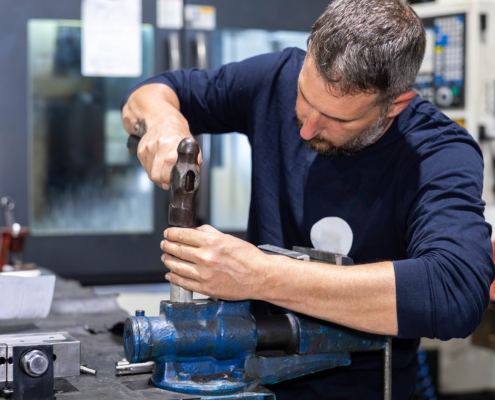
Hardfacing is a specialized welding technique that lays down a tough, wear‑resistant layer of material onto machinery parts that face heavy abrasion or impact. Instead of letting equipment components—like roller mill rings, hammer mill hammers, or crusher liners—wear down and require complete replacement, you simply reinforce their surfaces with an alloy designed to stand up to harsh conditions.

The Basics of the Process

The procedure begins with a thorough cleaning of the worn surface to remove rust, oil, and debris. Technicians then apply a hardfacing alloy—tungsten carbide, for example—using welding methods such as stick or MIG overlay, or more advanced processes like Plasma Transferred Arc (PTA). Once cooled, the new layer bonds metallurgically to the base metal, creating a protective shield against continuing wear.

Reducing Wear and Tear

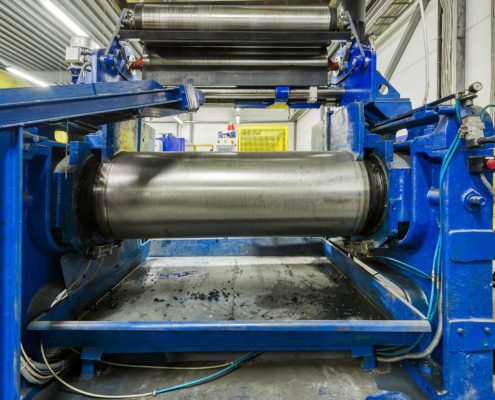
By proactively building up surfaces before they fail, hardfacing prevents the deep grooves, cracks, and thinning that lead to emergency downtime. Roller mill rings stay at the right diameter longer, maintaining grind efficiency. Hammer mill tips hold their profile, ensuring consistent impact energy. Across any heavy‑wear part, hardfacing slows the wear cycle—so you replace or reapply coatings on your own schedule, not in reaction to a breakdown.

Understanding the ROI of Hardfacing: Why It’s a Smart Investment?

Calculating return on investment (ROI) for hardfacing is straightforward once you compare the costs of preventive maintenance against those of reactive repairs and part replacements. The basic formula is:

ROI = (Savings from Maintenance – Cost of Maintenance) ÷ Cost of Maintenance

Preventive Costs vs. Emergency Expenses

Consider a hammer mill that chews through abrasive feedstock. If you wait until hammers are so worn they shatter, you’ll face a full set of new hammers at, say, $12,000, plus rush shipping and overtime labor—easily $15,000 total. In contrast, a scheduled hardfacing touch‑up might run $2,500 and be completed during planned downtime. That’s an immediate savings of over $12,000, before you even factor in the cost of lost production.

Long‑Term Savings Compound Quickly

Hardfacing doesn’t just save you money once—it keeps saving each time you follow your preventive schedule. Suppose you hardface your roller mill rings annually for $5,000. Without hardfacing, you’d replace them every 18 months at $20,000 apiece. Over five years, preventive maintenance costs total $25,000 versus $60,000 in replacement costs—netting a $35,000 saving. That’s an ROI of 140%.

Intangible Benefits Boost the ROI of Hardfacing Further

  • Reduced Downtime Risk: Planned maintenance windows avoid unpredictable stoppages that can halt multiple production lines.
  • Improved Process Consistency: Equipment that wears predictably maintains quality and throughput, safeguarding revenue and customer satisfaction.
  • Lower Inventory Carrying Costs: Fewer emergency parts on the shelf frees capital for other operational needs.

When you put these numbers on paper, the case for hardfacing becomes crystal clear. You’re investing in fewer interruptions, lower replacement costs, and steadier production—all of which drive substantial financial gains over time.

Ready to see hardfacing’s impact on your maintenance budget? Learn more about our rebuilding services and discover how our tungsten‑carbide solutions can extend your equipment’s life.

Explore Rebuilding

Comparing Costs: Hardfacing vs. Traditional Repairs and Replacements

When you stack up the numbers, hardfacing often wins hands down over conventional part rebuilding or replacement. Let’s break down the cost categories:

Upfront Investment

A full replacement of roller mill rings can set you back $20,000, while a scheduled hardfacing overlay on those same rings typically costs $4,000–$6,000. Even accounting for labor and setup, you’re spending less than a third of the replacement price—and you’re reusing perfectly good core components.

Ongoing Maintenance

Without hardfacing, a set of hammer mill hammers might require replacement every six months, each costing $10,000 in parts and installation. By contrast, a hardfacing refresh applied annually at $2,500 extends their life beyond twelve months. Over a three‑year span, you’d pay $60,000 in reactive replacements versus $7,500 for preventive hardfacing—plus you avoid multiple rounds of rush shipping and emergency labor rates.

Downtime and Productivity Loss

Emergency repairs often mean full‑shift stoppages. If your operation normally earns $5,000 in production value per hour, losing four hours for an unplanned hammer replacement racks up $20,000 in lost revenue. A planned hardfacing job might take the same interval but is already built into your maintenance calendar, so you avoid surprise stoppages and keep production forecasts on target.

Industries That Benefit Most from Hardfacing ROI

Almost any operation with heavy‑wear equipment can see substantial savings, but here are a few standout examples:

Construction

Excavator buckets and dozer blades face daily abrasion from rock, gravel, and soil. Hardfacing these edges cuts down on blade replacements—often required every six months—saving upwards of $25,000 per machine annually.

Mining

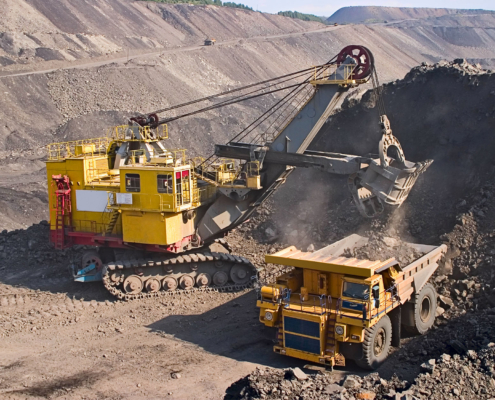
Crushers, hoppers, and conveyor components grind against ore and stone. Reactive replacements in a mid‑sized mine can total $200,000 a year. A hardfacing program trims that by more than 70%, freeing capital for expansion rather than spare‑parts inventory.

Agriculture

Plowshares, combine blades, and tillage tools endure tough soil and crop residue. Farmers report that hardfacing extends tool life from one growing season to three, cutting maintenance costs by over 60% and keeping harvest schedules on track.

Manufacturing

High‑speed rollers and punch presses take constant impact. In a stamping plant, unscheduled downtime for die replacements can cost $10,000 per hour in lost output. Hardfacing dies and supporting rollers reduces downtime by half, translating to $100,000+ saved per year.

Maximizing the ROI of Your Hardfacing: Best Practices

To turn hardfacing into a true profit driver, follow these key practices:

Schedule by Actual Wear, Not a Calendar

Track run hours and wear indicators—such as coating thickness or small surface cracks—to set maintenance intervals that match real‑world use.

Choose the Right Alloy

Match the material to your specific wear profile. Tungsten carbide excels in high‑abrasion settings, while nickel‑based alloys resist both abrasion and chemical attack. A material that’s a perfect fit will last far longer and avoid premature failures.

Maintain Detailed Records

Log the date, cost, materials used, and performance of every hardfacing job. Analyzing this data helps you refine intervals, tweak material choices, and prove ROI to stakeholders.

Partner with Experts

Work with a seasoned hardfacing provider who can recommend optimal alloys, apply advanced techniques (like Plasma Transferred Arc), and train your team on inspection and minor touch‑ups.

By integrating these best practices into your preventive maintenance program, you’ll not only lower costs but also build a scalable strategy that grows with your operation.

Improve Your ROI With Midwest Hardfacing

Hardfacing isn’t just a repair—it’s a powerful investment that pays dividends in reduced replacement costs, minimized downtime, and extended machinery life. By comparing preventive hardfacing to traditional repairs and replacements, you can see clearly how the numbers work in your favor.

If you’re ready to put real numbers behind your hardfacing strategy, contact Midwest Hardfacing today for a personalized ROI and hardfacing analysis and discover how preventive hardfacing maintenance can become your most effective cost‑saving measure.

Share This Post

  • Share on Facebook
  • Share on X
  • Share on WhatsApp
  • Share on Pinterest
  • Share on LinkedIn
  • Share on Tumblr
  • Share on Vk
  • Share on Reddit
  • Share by Mail

More Like This

Professional worker working on a steel piece with hammer in a metal factory workshop

Replace vs Hardface Mill Parts: Cost Analysis & Decision Guide

Hardfacing
https://midwesthardfacing.com/wp-content/uploads/2026/05/4_Professional-worker-working-on-a-steel-piece-with-hammer-in-a-metal-factory-workshop.jpg 1250 2000 Nate Riggins /wp-content/uploads/2024/03/Midwest-Hardfacing-1.png Nate Riggins2026-05-04 15:24:432026-05-04 15:28:42Replace vs Hardface Mill Parts: Cost Analysis & Decision Guide
Experienced operator in a hard hat. Metalworking industry

Industrial Hardfacing Services: Process, Benefits & ROI Guide

Hardfacing
https://midwesthardfacing.com/wp-content/uploads/2026/05/2_Experienced-operator-in-a-hard-hat.-Metalworking-industry.jpg 1250 2000 Abstrakt Marketing /wp-content/uploads/2024/03/Midwest-Hardfacing-1.png Abstrakt Marketing2026-05-04 15:17:332026-05-04 15:21:12Industrial Hardfacing Services: Process, Benefits & ROI Guide
Hardfacing vs. Welding- What’s the Difference

Hardfacing vs. Welding: What’s the Difference?

Hardfacing
https://midwesthardfacing.com/wp-content/uploads/2025/07/Hardfacing-vs.-Welding-Whats-the-Difference.jpg 1250 2000 Abstrakt Marketing /wp-content/uploads/2024/03/Midwest-Hardfacing-1.png Abstrakt Marketing2025-07-18 13:45:562026-05-04 09:19:41Hardfacing vs. Welding: What’s the Difference?

What Is Hardfacing and How it Could Extend the Life of Your Heavy Equipment

Hardfacing
https://midwesthardfacing.com/wp-content/uploads/2025/07/Sparks-flying-while-cutting-metal.jpg 1250 2000 Abstrakt Marketing /wp-content/uploads/2024/03/Midwest-Hardfacing-1.png Abstrakt Marketing2025-07-02 10:46:392026-05-04 09:19:41What Is Hardfacing and How it Could Extend the Life of Your Heavy Equipment
Closeup welding torch of Flux Core Welding process

The Science Behind Hardfacing

Hardfacing
https://midwesthardfacing.com/wp-content/uploads/2025/07/Closeup-welding-torch-of-Flux-Core-Welding-process.jpg 1250 2000 Abstrakt Marketing /wp-content/uploads/2024/03/Midwest-Hardfacing-1.png Abstrakt Marketing2025-07-02 10:25:582026-05-04 09:19:42The Science Behind Hardfacing

The Importance of Tungsten Carbide Overlays When Hardfacing Your Industrial Equipment

Hardfacing
https://midwesthardfacing.com/wp-content/uploads/2025/07/An-adult-male-works-in-an-old-workshop.jpg 1250 2000 Abstrakt Marketing /wp-content/uploads/2024/03/Midwest-Hardfacing-1.png Abstrakt Marketing2025-07-02 10:20:152026-05-04 09:19:42The Importance of Tungsten Carbide Overlays When Hardfacing Your Industrial Equipment
big yellow mining truck

Hardfacing Solutions for Mining: What You Need to Know

Hardfacing
https://midwesthardfacing.com/wp-content/uploads/2025/06/big-yellow-mining-truck.jpg 1250 2000 Abstrakt Marketing /wp-content/uploads/2024/03/Midwest-Hardfacing-1.png Abstrakt Marketing2025-06-26 10:31:072026-05-04 09:19:42Hardfacing Solutions for Mining: What You Need to Know
Factory for the production of conveyor belts

How Preventative Hardfacing Maintenance Can Minimize Downtime

Hardfacing
https://midwesthardfacing.com/wp-content/uploads/2025/06/Factory-for-the-production-of-conveyor-belts.jpg 1250 2000 Abstrakt Marketing /wp-content/uploads/2024/03/Midwest-Hardfacing-1.png Abstrakt Marketing2025-06-16 13:56:012026-05-04 09:19:42How Preventative Hardfacing Maintenance Can Minimize Downtime

How Environmental Factors Affect Hardfacing Performance

Hardfacing
https://midwesthardfacing.com/wp-content/uploads/2024/06/Worker-hardfacing-parts.jpg 1250 2000 Abstrakt Marketing /wp-content/uploads/2024/03/Midwest-Hardfacing-1.png Abstrakt Marketing2025-05-21 16:27:052026-05-04 09:19:42How Environmental Factors Affect Hardfacing Performance
Previous Previous Previous Next Next Next

Categories

  • Component Hardfacing
  • Downtime Reduction
  • Efficiency Optimization
  • Hammer Mill Operation
  • Hammer Mill Optimization
  • Hammer Mill Parts
  • Hammer Mill Repair
  • Hardfacing
  • Industrial Equipment Maintenance
  • Industrial Training
  • Maintenance Strategies
  • Mining
  • Preventive Maintenance
  • Roller Mill Optimization
  • Roller Mill Parts
  • Roller Mills
  • Vibration Control
  • Wear Parts
  • Workplace Safety

Contact Us

"*" indicates required fields

Who We Are

Midwest Hardfacing provides high-quality parts and services for roller and hammer mill across the world.

What We Do

Roller Mill Parts

Hammer Mill Parts

Services

Used Parts

Contact Us

205 E 4th Street / Rock Falls, IL 61071

(815) 622-9420

sales@midwesthardfacing.com

Website by Abstrakt Marketing Group ©
  • LinkedIn
  • Sitemap
  • Privacy Policy
Link to: Hammer Mill Hammers for Feed, Grain, and Biomass: What’s the Difference? Link to: Hammer Mill Hammers for Feed, Grain, and Biomass: What’s the Difference? Hammer Mill Hammers for Feed, Grain, and Biomass: What’s the Difference? Link to: Hardfacing Solutions for Mining: What You Need to Know Link to: Hardfacing Solutions for Mining: What You Need to Know big yellow mining truckHardfacing Solutions for Mining: What You Need to Know
Scroll to top Scroll to top Scroll to top

This site uses cookies. By continuing to browse the site, you are agreeing to our use of cookies.

OKLearn more

Cookie and Privacy Settings


How we use cookies

We may request cookies to be set on your device. We use cookies to let us know when you visit our websites, how you interact with us, to enrich your user experience, and to customize your relationship with our website.

Click on the different category headings to find out more. You can also change some of your preferences. Note that blocking some types of cookies may impact your experience on our websites and the services we are able to offer.

Essential Website Cookies

These cookies are strictly necessary to provide you with services available through our website and to use some of its features.

Because these cookies are strictly necessary to deliver the website, refusing them will have impact how our site functions. You always can block or delete cookies by changing your browser settings and force blocking all cookies on this website. But this will always prompt you to accept/refuse cookies when revisiting our site.

We fully respect if you want to refuse cookies but to avoid asking you again and again kindly allow us to store a cookie for that. You are free to opt out any time or opt in for other cookies to get a better experience. If you refuse cookies we will remove all set cookies in our domain.

We provide you with a list of stored cookies on your computer in our domain so you can check what we stored. Due to security reasons we are not able to show or modify cookies from other domains. You can check these in your browser security settings.

Other external services

We also use different external services like Google Webfonts, Google Maps, and external Video providers. Since these providers may collect personal data like your IP address we allow you to block them here. Please be aware that this might heavily reduce the functionality and appearance of our site. Changes will take effect once you reload the page.

Google Webfont Settings:

Google Map Settings:

Google reCaptcha Settings:

Vimeo and Youtube video embeds:

Accept settingsHide notification only