Midwest Hardfacing
  • Roller Mill Parts
    • Rings
    • Rolls
    • Journals
    • Spiders and Supports
    • Wear Parts
  • Hammer Mill Parts
    • Pins and Rods
    • Hammers
  • Services
    • Rebuilding
    • Reverse Engineering / Custom Parts
    • Consulting
  • Used Parts
    • Used Parts Inventory
  • About Us
    • Blog
    • Careers
  • Contact
  • Menu Menu

Hardfacing vs. Welding: What’s the Difference?

If you’ve ever wondered how hardfacing compares with traditional welding, you’re not alone. While they both involve applying heat and filler metal to surfaces, the goals they serve are entirely different. Understanding how they work (and when to use them) can lead to smarter maintenance decisions and longer equipment life.

Why It Matters to Understand the Difference

Heavy equipment is constantly under stress, whether it’s from abrasive materials, repeated impact, or sheer mechanical load. When parts wear out or break down, welding is often part of the repair process. But here’s where many maintenance teams get tripped up: not all welding techniques are used for the same purpose.

If you’re reinforcing a wear surface, hardfacing is your go-to. If you’re reconnecting two broken steel sections or fabricating a structure from scratch, traditional welding is the better fit. Mixing up the two can lead to ineffective repairs, higher costs, and unnecessary downtime.

Let’s walk through what sets these methods apart and how each contributes to better-performing equipment.

What Is Hardfacing?

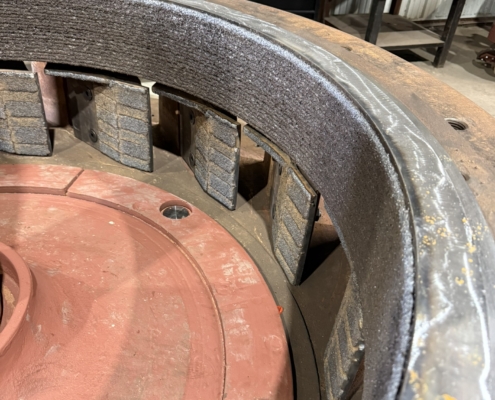
Hardfacing is a wear-resistant overlay welding process. It involves applying a layer of tough, abrasion-resistant material to the surface of an existing metal component. The goal? To protect high-wear areas from damage caused by friction, impact, erosion, or corrosion.

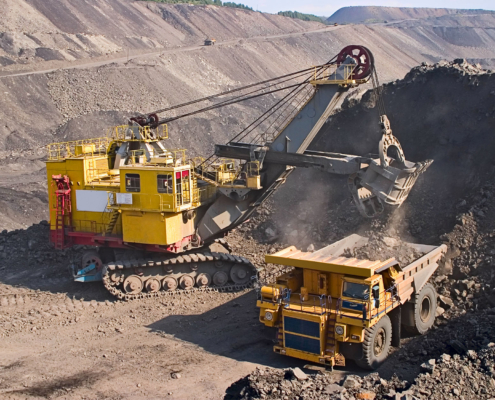
This technique is especially valuable in industries where parts are exposed to constant punishment—think crushers, grinder plates, excavator buckets, or hammer mill hammers. Instead of replacing these parts frequently, hardfacing gives them a protective coating that extends their usable life.

Common hardfacing materials include:

  • Tungsten carbide
  • Chromium carbide
  • Cobalt-based alloys
  • Nickel-based alloys

The hardfaced layer can be applied using methods like MIG, TIG, stick welding, or thermal spray—whichever is best for the base material and wear conditions.

What Is Traditional Welding?

Traditional welding involves melting and fusing metal parts together, typically to repair breaks, strengthen joints, or fabricate new equipment structures. When comparing hardfacing vs. welding, traditional welding focuses primarily on structural integrity rather than surface durability or abrasion resistance.

Common methods of traditional welding include MIG (metal inert gas), TIG (tungsten inert gas), and stick welding, each suited for different materials and applications.

Traditional welding is widely used across numerous industries, including:

  • Construction and Infrastructure: For structural repairs and building frameworks.
  • Automotive and Transportation: Fabricating vehicle parts and frames.
  • Heavy Equipment Repair: General maintenance and repairs for machinery components.
  • Manufacturing: Assembling parts and fabricating machinery structures.

Traditional welding is often the go-to method when structural strength is required, but it may fall short in high-wear scenarios where surface durability is crucial.

Want to make your worn-down equipment last longer? Learn how hardfacing can restore performance and improve durability for your most used parts.

Explore Rebuilding Services

When Should You Use Hardfacing?

Hardfacing is all about extending the life of components that regularly face high wear and tear. It’s especially valuable when equipment is constantly exposed to abrasion, impact, or erosion. Instead of replacing worn parts entirely, hardfacing applies a protective layer that reinforces the original surface and significantly improves its durability.

This makes hardfacing ideal for parts like Raymond mill grinding rolls, hammer mill hammers and pins, bucket edges, augers, and other components that are repeatedly subjected to harsh conditions. In many cases, applying a hardfacing overlay can give these parts a second life, often performing better than they did when new.

When comparing hardfacing vs. welding, this process isn’t about reconnecting broken materials; it’s about proactively defending high-wear surfaces from future damage. That’s what makes it a smart investment for operations focused on minimizing downtime and maximizing part longevity.

When Is Traditional Welding the Right Choice?

Traditional welding plays a critical role in structural repair and fabrication. If a component is cracked, fractured, or completely broken apart, welding is used to rejoin the pieces and restore its structural integrity. It’s also commonly used when fabricating new parts from scratch or reinforcing areas of equipment that have weakened over time.

Consider a cracked mill housing or a broken support bracket—this is where welding comes in. These aren’t surface wear issues; they’re structural problems that demand a different solution than what hardfacing provides.

The conversation around hardfacing vs. welding really boils down to purpose. Welding is about reassembly and strength. Hardfacing is about protection and endurance. In many equipment maintenance routines, both methods play important—but very different—roles.

Can Hardfacing and Welding Work Together?

Yes, and often, they should. A typical repair may start with traditional welding to rebuild or reshape a component that’s been structurally compromised. Once the base is restored, hardfacing can be applied to strengthen the surfaces most vulnerable to wear. This dual approach not only restores the equipment but makes it tougher going forward.

In the hardfacing vs. welding conversation, it’s important to recognize they’re not competing options. In many repair strategies, they’re complementary steps. Together, they help you get the most from your existing equipment while minimizing the need for costly replacements.

Why Material Selection and Application Technique Matter

Whether you’re hardfacing a surface or welding a broken part back together, the materials and methods you use will directly impact the quality of the repair. Hardfacing success depends on choosing alloys that match the type of wear your equipment faces, abrasion, impact, heat, or corrosion. A mismatched hardfacing material might crack under pressure or wear out prematurely.

The same goes for welding. Using the wrong filler metal or improper technique can result in brittle joints, incomplete fusion, or faster failure. That’s why it’s so important to work with professionals who understand your equipment and the stresses it’s under.

Final Thoughts on Hardfacing vs. Welding

If you’re weighing the pros and cons of hardfacing vs. welding, start by identifying what your equipment actually needs. If you’re trying to fix a break, welding is your answer. If you’re trying to stop surface wear from shortening your equipment’s life, hardfacing is the better solution.

Understanding the difference between these two techniques allows you to make smarter repair decisions, improve equipment longevity, and avoid unexpected downtime. Use the right process at the right time, and you’ll see the difference not just in part performance, but in your bottom line.

Extend the Life of Your Equipment With Expert Repair

If you’re not sure which approach your equipment needs, Midwest Hardfacing can help. Whether you’re dealing with heavy surface wear or a structural breakdown, our team knows how to apply the right solution, whether that’s advanced hardfacing, precision welding, or both. Reach out today to schedule a consultation and find out how we can help you restore and reinforce the equipment you rely on.

Share This Post

  • Share on Facebook
  • Share on X
  • Share on WhatsApp
  • Share on Pinterest
  • Share on LinkedIn
  • Share on Tumblr
  • Share on Vk
  • Share on Reddit
  • Share by Mail

More Like This

Professional worker working on a steel piece with hammer in a metal factory workshop

Replace vs Hardface Mill Parts: Cost Analysis & Decision Guide

Hardfacing
https://midwesthardfacing.com/wp-content/uploads/2026/05/4_Professional-worker-working-on-a-steel-piece-with-hammer-in-a-metal-factory-workshop.jpg 1250 2000 Nate Riggins /wp-content/uploads/2024/03/Midwest-Hardfacing-1.png Nate Riggins2026-05-04 15:24:432026-05-04 15:28:42Replace vs Hardface Mill Parts: Cost Analysis & Decision Guide
Experienced operator in a hard hat. Metalworking industry

Industrial Hardfacing Services: Process, Benefits & ROI Guide

Hardfacing
https://midwesthardfacing.com/wp-content/uploads/2026/05/2_Experienced-operator-in-a-hard-hat.-Metalworking-industry.jpg 1250 2000 Abstrakt Marketing /wp-content/uploads/2024/03/Midwest-Hardfacing-1.png Abstrakt Marketing2026-05-04 15:17:332026-05-04 15:21:12Industrial Hardfacing Services: Process, Benefits & ROI Guide

What Is Hardfacing and How it Could Extend the Life of Your Heavy Equipment

Hardfacing
https://midwesthardfacing.com/wp-content/uploads/2025/07/Sparks-flying-while-cutting-metal.jpg 1250 2000 Abstrakt Marketing /wp-content/uploads/2024/03/Midwest-Hardfacing-1.png Abstrakt Marketing2025-07-02 10:46:392026-05-04 09:19:41What Is Hardfacing and How it Could Extend the Life of Your Heavy Equipment
Closeup welding torch of Flux Core Welding process

The Science Behind Hardfacing

Hardfacing
https://midwesthardfacing.com/wp-content/uploads/2025/07/Closeup-welding-torch-of-Flux-Core-Welding-process.jpg 1250 2000 Abstrakt Marketing /wp-content/uploads/2024/03/Midwest-Hardfacing-1.png Abstrakt Marketing2025-07-02 10:25:582026-05-04 09:19:42The Science Behind Hardfacing

The Importance of Tungsten Carbide Overlays When Hardfacing Your Industrial Equipment

Hardfacing
https://midwesthardfacing.com/wp-content/uploads/2025/07/An-adult-male-works-in-an-old-workshop.jpg 1250 2000 Abstrakt Marketing /wp-content/uploads/2024/03/Midwest-Hardfacing-1.png Abstrakt Marketing2025-07-02 10:20:152026-05-04 09:19:42The Importance of Tungsten Carbide Overlays When Hardfacing Your Industrial Equipment
big yellow mining truck

Hardfacing Solutions for Mining: What You Need to Know

Hardfacing
https://midwesthardfacing.com/wp-content/uploads/2025/06/big-yellow-mining-truck.jpg 1250 2000 Abstrakt Marketing /wp-content/uploads/2024/03/Midwest-Hardfacing-1.png Abstrakt Marketing2025-06-26 10:31:072026-05-04 09:19:42Hardfacing Solutions for Mining: What You Need to Know

The ROI of Hardfacing: Breaking Down the Numbers

Hardfacing
https://midwesthardfacing.com/wp-content/uploads/2025/06/IMG_0560.jpeg 2048 1536 Abstrakt Marketing /wp-content/uploads/2024/03/Midwest-Hardfacing-1.png Abstrakt Marketing2025-06-26 08:50:272026-05-04 09:19:42The ROI of Hardfacing: Breaking Down the Numbers
Factory for the production of conveyor belts

How Preventative Hardfacing Maintenance Can Minimize Downtime

Hardfacing
https://midwesthardfacing.com/wp-content/uploads/2025/06/Factory-for-the-production-of-conveyor-belts.jpg 1250 2000 Abstrakt Marketing /wp-content/uploads/2024/03/Midwest-Hardfacing-1.png Abstrakt Marketing2025-06-16 13:56:012026-05-04 09:19:42How Preventative Hardfacing Maintenance Can Minimize Downtime

How Environmental Factors Affect Hardfacing Performance

Hardfacing
https://midwesthardfacing.com/wp-content/uploads/2024/06/Worker-hardfacing-parts.jpg 1250 2000 Abstrakt Marketing /wp-content/uploads/2024/03/Midwest-Hardfacing-1.png Abstrakt Marketing2025-05-21 16:27:052026-05-04 09:19:42How Environmental Factors Affect Hardfacing Performance
Previous Previous Previous Next Next Next

Categories

  • Component Hardfacing
  • Downtime Reduction
  • Efficiency Optimization
  • Hammer Mill Operation
  • Hammer Mill Optimization
  • Hammer Mill Parts
  • Hammer Mill Repair
  • Hardfacing
  • Industrial Equipment Maintenance
  • Industrial Training
  • Maintenance Strategies
  • Mining
  • Preventive Maintenance
  • Roller Mill Optimization
  • Roller Mill Parts
  • Roller Mills
  • Vibration Control
  • Wear Parts
  • Workplace Safety

Contact Us

"*" indicates required fields

Who We Are

Midwest Hardfacing provides high-quality parts and services for roller and hammer mill across the world.

What We Do

Roller Mill Parts

Hammer Mill Parts

Services

Used Parts

Contact Us

205 E 4th Street / Rock Falls, IL 61071

(815) 622-9420

sales@midwesthardfacing.com

Website by Abstrakt Marketing Group ©
  • LinkedIn
  • Sitemap
  • Privacy Policy
Link to: Understanding Hammer Mill Part Wear and Tear Link to: Understanding Hammer Mill Part Wear and Tear Understanding Hammer Mill Part Wear and TearStainless steel pipe, flange and bolts Link to: What to Look for When Buying a Used Vertical Roller Mill Link to: What to Look for When Buying a Used Vertical Roller Mill What to Look for When Buying a Used Vertical Roller Mill
Scroll to top Scroll to top Scroll to top

This site uses cookies. By continuing to browse the site, you are agreeing to our use of cookies.

OKLearn more

Cookie and Privacy Settings


How we use cookies

We may request cookies to be set on your device. We use cookies to let us know when you visit our websites, how you interact with us, to enrich your user experience, and to customize your relationship with our website.

Click on the different category headings to find out more. You can also change some of your preferences. Note that blocking some types of cookies may impact your experience on our websites and the services we are able to offer.

Essential Website Cookies

These cookies are strictly necessary to provide you with services available through our website and to use some of its features.

Because these cookies are strictly necessary to deliver the website, refusing them will have impact how our site functions. You always can block or delete cookies by changing your browser settings and force blocking all cookies on this website. But this will always prompt you to accept/refuse cookies when revisiting our site.

We fully respect if you want to refuse cookies but to avoid asking you again and again kindly allow us to store a cookie for that. You are free to opt out any time or opt in for other cookies to get a better experience. If you refuse cookies we will remove all set cookies in our domain.

We provide you with a list of stored cookies on your computer in our domain so you can check what we stored. Due to security reasons we are not able to show or modify cookies from other domains. You can check these in your browser security settings.

Other external services

We also use different external services like Google Webfonts, Google Maps, and external Video providers. Since these providers may collect personal data like your IP address we allow you to block them here. Please be aware that this might heavily reduce the functionality and appearance of our site. Changes will take effect once you reload the page.

Google Webfont Settings:

Google Map Settings:

Google reCaptcha Settings:

Vimeo and Youtube video embeds:

Accept settingsHide notification only